Drive along the I-880 corridor on a weekday morning and you’ll pass food producers, manufacturers, auto businesses, and distribution centers, many with shift supervisors who need a current First Aid card on file. A few miles east, students at Cal State East Bay and Chabot College are lining up clinical placements and campus jobs that may ask for the same thing. That mix of workplaces and classrooms is a big reason people search for American Red Cross CPR and First Aid certification classes in Hayward, CA.
Most options fall into four groups: CPR, First Aid, CPR/AED, and combined First Aid/CPR/AED. Some cover adults only, while others add children and infants. Warehouse leads, forklift operators, preschool aides, home caregivers, coaches, and students can all find a course that fits. The practical question is which one matches your actual requirement, and this article walks through how to answer it.
Short answer: People in Hayward can take American Red Cross CPR and First Aid training through local providers, including Safety Training Seminars on A Street downtown. Base your choice on why you need it. A workplace safety role, a school or clinical program, a childcare job, and personal preparedness may each call for a different course.
What Is the Difference Between CPR and First Aid Training?
The two get mentioned together so often that people assume they’re the same class. They aren’t.
CPR training teaches you to act when someone is unresponsive and not breathing normally. You learn to recognize a likely cardiac arrest, get help moving, and perform chest compressions and rescue breaths.
First Aid training covers the far more common situations where the heart is still beating but someone needs care. Depending on the course, that can include bleeding, burns, sudden illness, injuries, and heat- or cold-related emergencies.
AED training is the bridge. An automated external defibrillator is used during sudden cardiac arrest, so AED skills are typically taught with CPR. Many workplaces keep an AED mounted near a breakroom or entrance, and trained staff are expected to know how to use it.
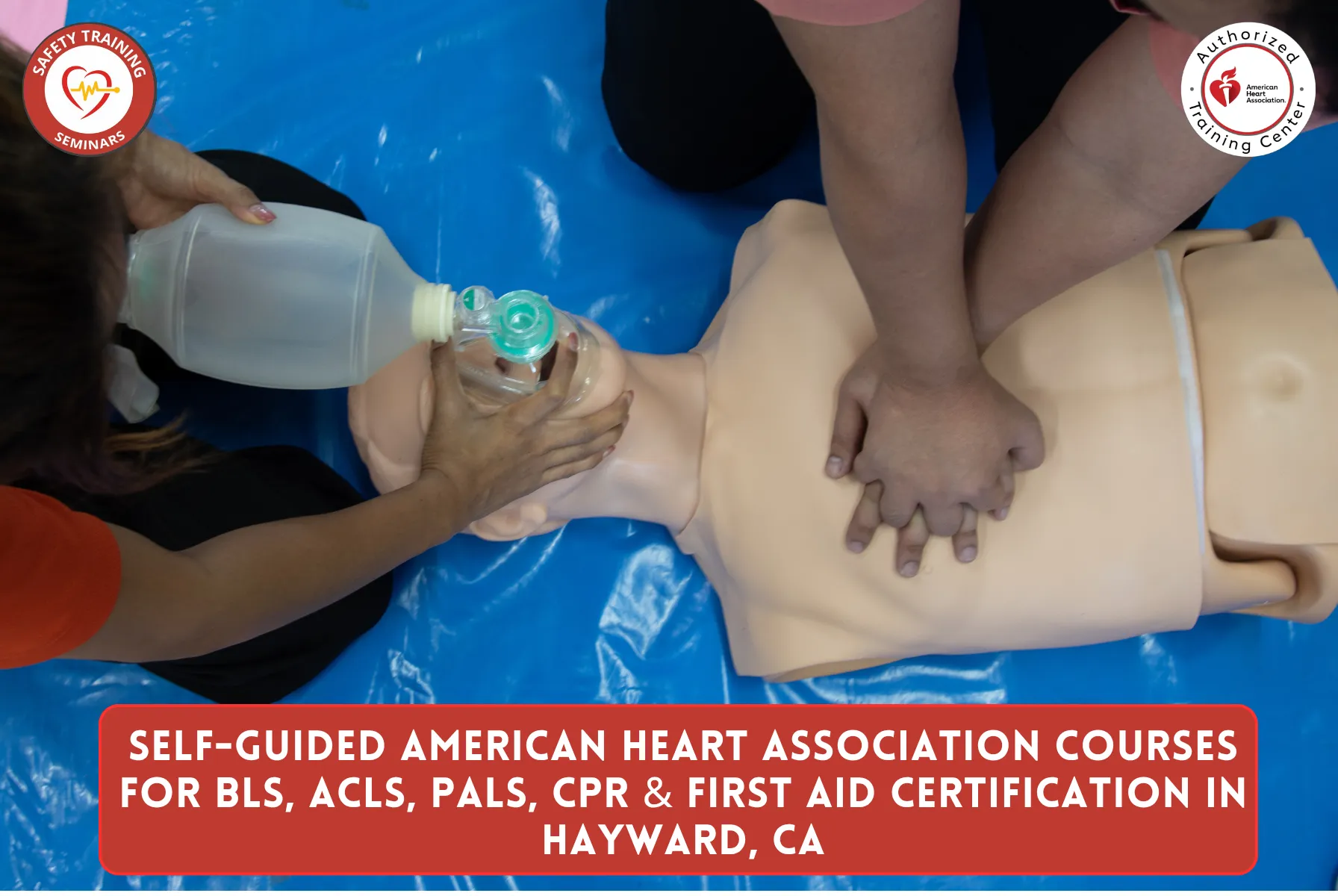
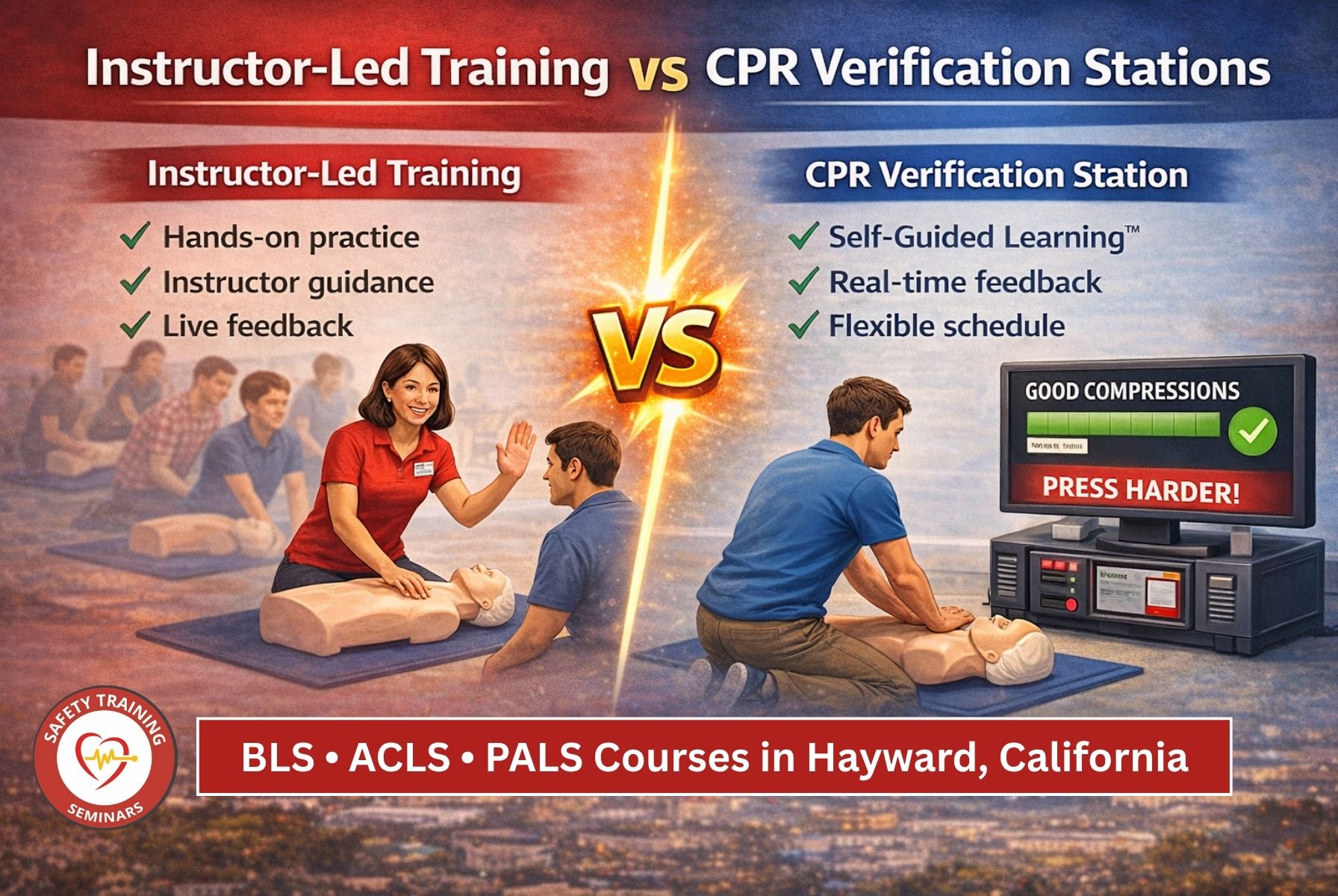
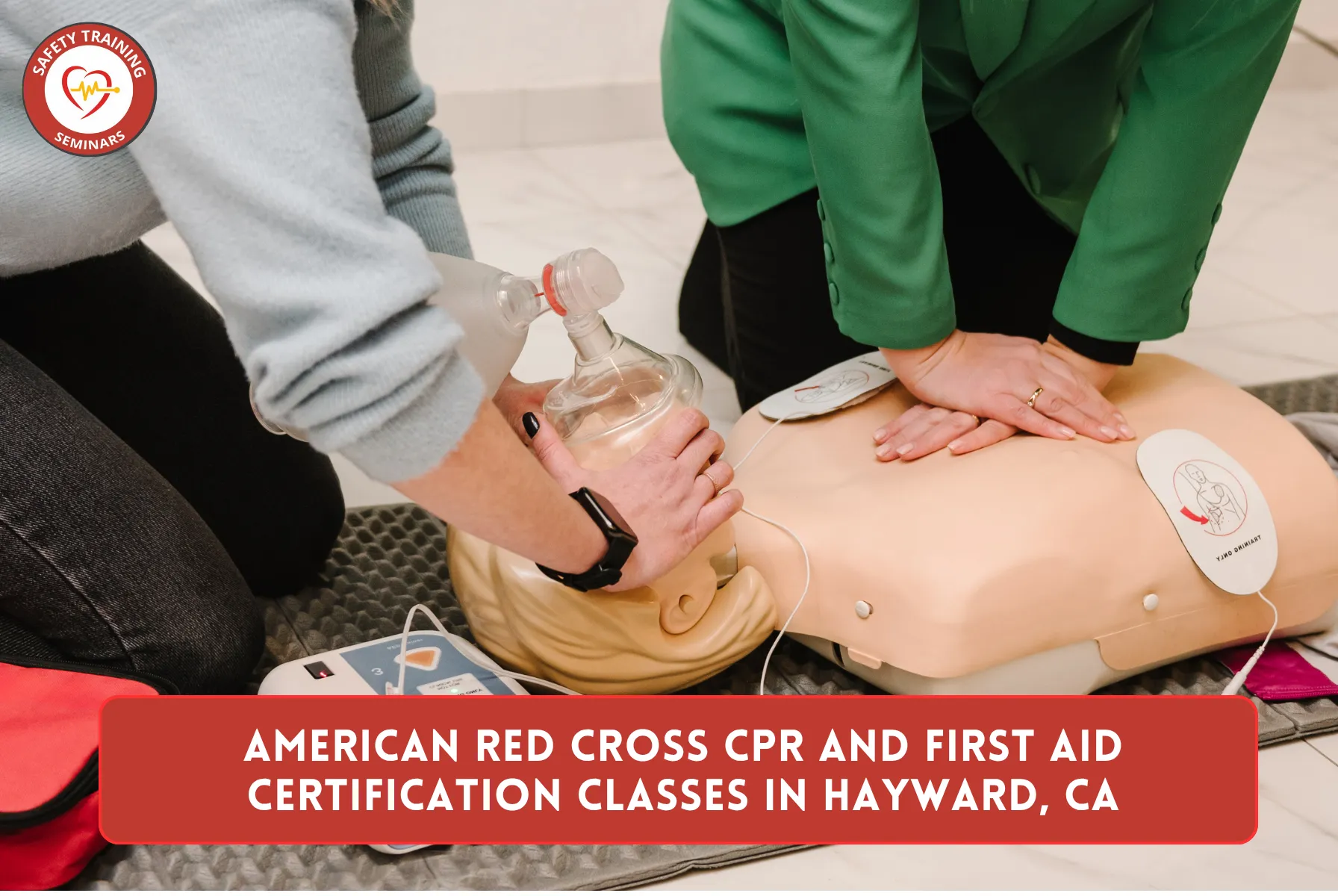
Course formats vary too. Many American Red Cross courses are blended: you finish an online module, then attend an in-person skills session with an instructor and manikins. That hands-on step is where you actually practice compression depth, pacing, and AED pad placement. Employers with safety compliance obligations often expect it, so don’t assume an online-only certificate will be accepted. Ask first.
Workplace First Aid, CPR, and AED Training in Hayward
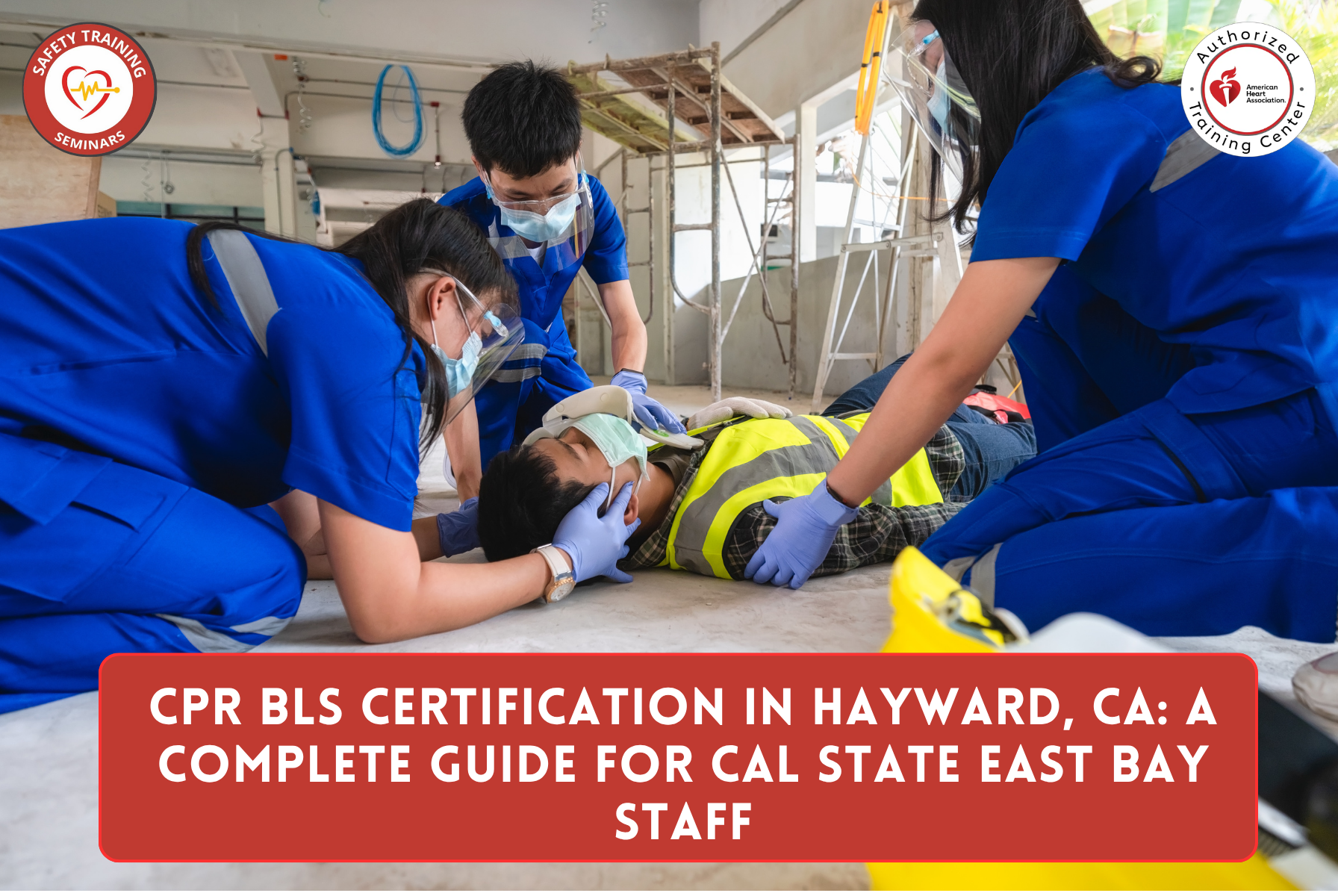
For much of Hayward, workplace training is the main reason to enroll. The city has a long industrial history, with manufacturing plants, bakeries, beverage operations, and bus manufacturing among its larger employers over the years. Environments like these involve machinery, loading docks, and long shifts, where cuts, falls, and sudden illness are realistic concerns.
At the federal level, OSHA’s general industry standard calls for someone trained in first aid to be readily available when a workplace isn’t near a clinic, infirmary, or hospital. How that applies depends on the site, the employer’s safety plan, and any Cal/OSHA rules. Employers usually decide who gets trained, often supervisors, leads, or members of a safety team.
If your manager asked you to “get certified,” a combined First Aid/CPR/AED course is frequently what’s meant. Confirm before registering: some companies want pediatric content, and some only need adult coverage.
CPR Training for Adults, Children, and Infants
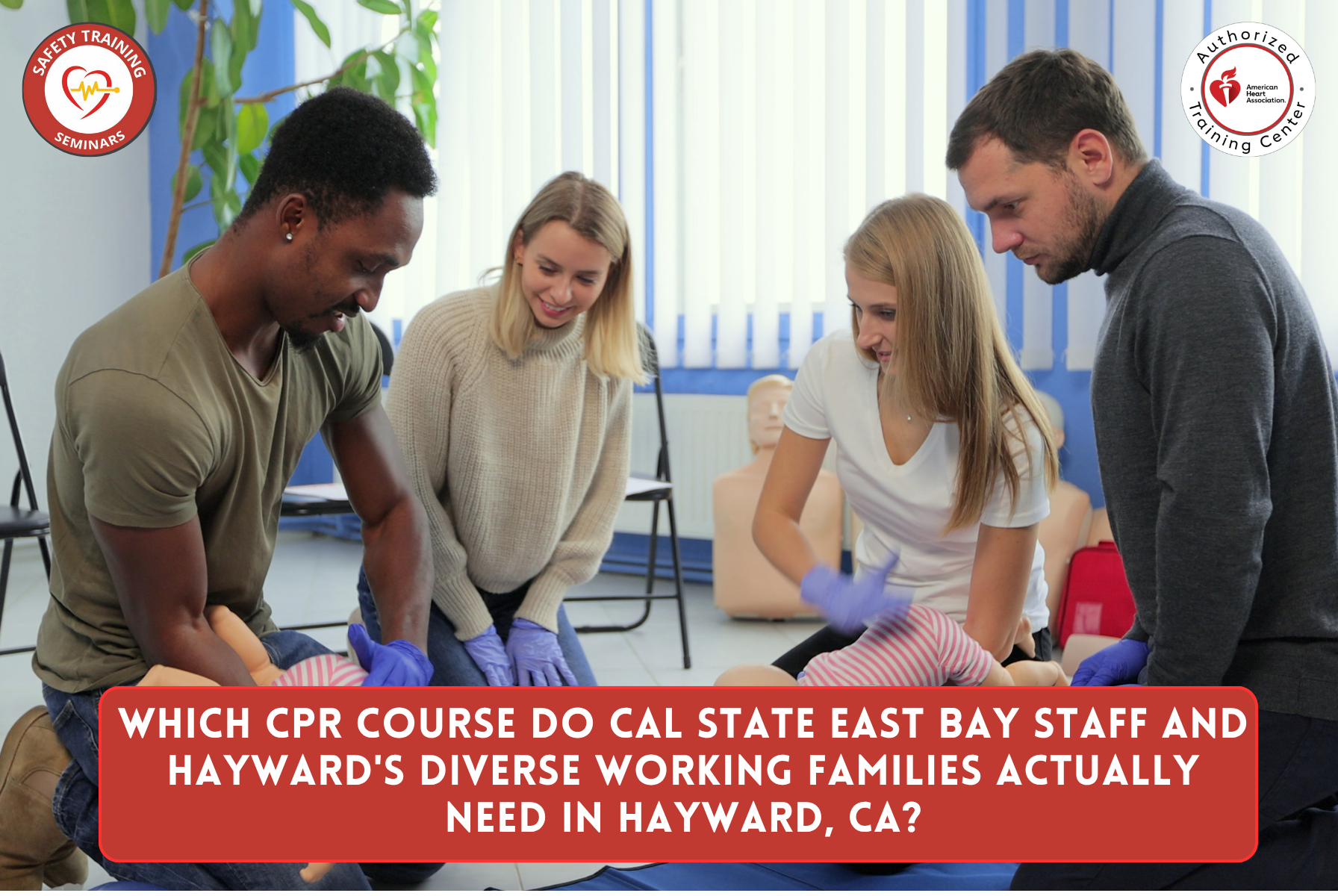
Not every CPR class is built the same way. The main split is between adult-only courses and adult-and-pediatric courses. Techniques for infants and small children differ from adult CPR, so anyone around young kids at work or at home should look for pediatric coverage.
- Adult CPR/AED may satisfy many general workplace needs.
- Adult and pediatric CPR/AED is often preferred by schools, recreation programs, and childcare settings.
- Basic Life Support (BLS) is a professional-level course that hospitals, clinics, and many healthcare programs commonly require instead of community CPR.
That last point trips people up. If a job listing or nursing program says “BLS,” a standard CPR/AED class may not count. Match the exact course name.
Who Takes CPR and First Aid Classes in Hayward?
Warehouse, Manufacturing, and Logistics Workers
Designated responders at industrial and distribution sites are a large share of local learners. First Aid/CPR/AED is the typical choice, but your safety coordinator has the final word.
College Students
Hayward is a college town in its own right, home to the main Cal State East Bay campus and Chabot College. Students in health-related, kinesiology, education, or recreation pathways may need certification before internships, clinical rotations, or campus employment. Program rules differ, so check your department’s checklist.
Healthcare and Care Workers
St. Rose Hospital, now affiliated with Alameda Health System, is Hayward’s only emergency room. Medical offices, skilled nursing, and home care agencies round out local healthcare employment. Clinical staff often need BLS, while support roles and home caregivers may need CPR or First Aid.
Teachers, Preschool Staff, and Childcare Providers
Hayward Unified, preschools, and family childcare homes may require CPR and First Aid with pediatric content. Requirements differ by position and program, so confirm with your director or HR.
Coaches and Recreation Staff
Youth sports leagues, gyms, and recreation programs across the city may ask coaches and instructors to hold current CPR/AED and First Aid.
Families and Neighbors
Some people enroll simply because they care for a grandparent, a newborn, or a child with a medical condition.
How Do I Pick the Right Course?
This table is a general guide, not a legal or employment rule:
| Training Type | Typical Use |
| CPR | Focused on responding to cardiac and breathing emergencies |
| First Aid | Caring for common injuries and sudden medical problems |
| CPR/AED | CPR skills plus how to operate an AED |
| First Aid/CPR/AED | Broader training combining all three areas |
Before paying for anything, get these answers from your employer, school, licensing body, healthcare organization, or workplace safety coordinator:
- The exact course title required
- Whether pediatric content is needed
- Whether an in-person skills session is mandatory
- Whether American Red Cross certification is accepted
Having those details in writing, even in a quick email, helps if questions come up later.
Local Considerations: Earthquakes, Commutes, and Nearby Cities
Hayward sits directly on the Hayward Fault, and geologists have long warned that a major quake along it is likely. After a large earthquake, emergency services can be stretched thin. That’s one reason some residents take First Aid training for household preparedness, not only for work.
Getting to class matters too. Hayward has two BART stations plus quick access to I-880, I-238, and Highway 92, so a downtown location is reachable for people coming from San Leandro, Castro Valley, San Lorenzo, Union City, or across the San Mateo Bridge. If you commute, consider whether a class near your workplace or near a BART stop is easier than one near home.
Many American Red Cross certificates are valid for two years. Note your expiration date so a renewal doesn’t collide with a job start or semester deadline.
Safety Training Seminars in Hayward
Safety Training Seminars operates a Hayward CPR training center at 1070 A Street, Suite 4, Hayward, CA 94541, in the downtown area near the Hayward BART station.
To see current options, browse the CPR and First Aid training available in Hayward. Before you book, check:
- The course name
- Whether it includes pediatric skills
- The format and any online coursework due before the skills session
- Whether it matches the wording your employer or school gave you
Taking two minutes to compare those details avoids signing up for a class that doesn’t meet your requirement.
Why Consider Safety Training Seminars for CPR and First Aid Training in Hayward, CA
A few practical reasons. The training center is in Hayward itself, so local workers and students don’t need to travel to Oakland or San Jose for a skills session. Safety Training Seminars lists CPR, First Aid, and BLS options for the area, which helps when one person needs workplace First Aid and a coworker or classmate needs BLS.
If you’re comparing across course levels, including advanced healthcare training, you can also look at Hayward CPR, BLS, and advanced course options to understand what each level is for.
Frequently Asked Questions
My Hayward warehouse job says I need First Aid. Which course should I take?
Start by asking your supervisor or safety coordinator for the exact course title. Many workplaces want a combined First Aid/CPR/AED course, but some only need adult coverage while others require pediatric skills. Getting the name in writing before registering prevents you from repeating training.
Can Cal State East Bay or Chabot College students take these classes?
Yes. Students commonly take CPR and First Aid training for internships, clinical placements, or campus jobs. Some health programs require BLS rather than a community CPR course, so review your program’s requirements or ask an advisor before enrolling.
Is First Aid the same as CPR?
No. CPR addresses cardiac and breathing emergencies, while First Aid covers injuries and sudden illnesses where the heart is still beating. Combined courses teach both, along with AED use.
Where is there a CPR training center near downtown Hayward?
Safety Training Seminars has a training center on A Street in downtown Hayward, near the Hayward BART station. People from San Leandro, Castro Valley, and Union City may find it reachable by BART or I-880. Check the course page for current class options.
Will my employer accept American Red Cross certification?
Many employers do, but acceptance is up to each organization. Healthcare employers, schools, and licensing bodies sometimes name a specific course or provider. Confirm with HR or your program coordinator before registering.
Does training help with earthquake preparedness?
It can. First Aid skills are useful when emergency services are delayed, which can happen after a major earthquake. Training doesn’t replace a household preparedness plan, but it adds practical skills to one.
Choosing Your Class in Hayward
CPR prepares you for the moment someone’s heart or breathing stops. First Aid prepares you for everything else: the cut on a production line, the fall on a stairwell, the student who suddenly feels faint. AED training links the two. Which one you need depends on your job, program, or household, not the course title that sounds most complete.
If you work, study, or live in Hayward, get your requirement confirmed first. Then compare course options at Safety Training Seminars’ downtown Hayward location and register for the class that matches it.